Author Archive
Question : Is Reverse Osmosis Water Safe To Drink?
Posted by: | CommentsAnswer: YES! RO water is perfectly safe to drink. There is also a scientific explanation as to why RO water is actually better for you than water that contains high mineral (TDS) content.
Water with a high Total Dissolved Solids (TDS) counts , actually become electrically charged and can conduct very small amounts of electric current. High TDS water, under the right circumstances, can actually cause a small electric light bulb to become illuminated!
Water with a high TDS count is typically a base, (slightly alkaline), substance that is lacking in hydrogen molecules, and will search for hydrogen molecules in the body to balance itself. This type of water often causes de-hydration on the cellular level.
Reverse Osmosis water with low TDS on the other hand, has a much lower ability to conduct electrical charges. Typically, Reverse Osmosis water is slightly acidic and loaded with positively charged hydrogen (H+) molecules. This type of water has been scientifically proven to provide superior hydration at the cellular level.
You are made up of about 28 trillion cells, which consist of more than 70% water. These cells constantly cleanse, nourish and regenerate to keep you alive and healthy. You certainly don’t want to tax them with the added burden of cleaning out the industrial and natural contaminants found in water today.
Reverse osmosis water purification is an extremely effective and safe way to remove impurities in normal tap water that comes from a treatment plant. RO water treatment is one of the best ways to keep your family healthy and the water free from bacteria and the harmful contaminants.
Question: How Does Reverse Osmosis Work?
Posted by: | CommentsAnswer: In modern home RO systems, water driven by normal city water pressure, flows first through a sediment pre-filter which removes dirt and small particles that are in the water, next a carbon block pre-filter, removes organic contaminants including chlorine and its by-products. Then, it enters the reverse osmosis membrane, a very tight, sheet-like filter, that allows water to pass but rejects dissolved solids like sodium and impurities like lead and arsenic. The city water line pressure allows the Reverse Osmosis process to take place. Some of the water entering the unit is used to cleanse the membrane surface and flows to the kitchen drain pipes. The purified water is stored in the storage tank until it is used for your drinking and cooking requirements. When the faucet mounted on the sink is opened, the purified water is forced by air pressure through another carbon post filter, which gives it a final polish and from there to the faucet. (This is a simplified description of a four-stage RO unit. -The simplified description omits a few very essential parts like saddle valve, flow control resctictors, check valves, drain clamps, and automatic shutoff device that stops the inflow of water when the storage tank is full.)
Deionized Water For Reef Users
Posted by: | CommentsBackground
Reverse osmosis deionization units (RO/DI) are essential in the successful management of a reef tank. These units provide ultra pure water for a stable, predictable reef environment. The purified water allows the reef aquarist to determine and add only the essential trace elements and other essential nutrients to the water without any other unwanted metals or organic impurities.
What is Deionization?
It is the removal of mineral ions by using the ion exchange process. Using a mixed bed of anion and cation resins; ions, salts and minerals can be entirely removed from water.
How long does DI last — What is its life?
The RO membrane has a direct impact on the life-span of the DI. The RO membrane can remove about 95-98% of TDS (minerals) in your water. When a DI is used after the RO membrane, you can expect almost 100% removal of the TDS.
On average, a pound of DI resin will have a life of approximately 600 gallons of water when the DI housing is installed after a RO system.
There are some exceptions to the amount of gallons that can be treated by a pound of DI resin. Higher than usual levels of some TDS can cause the DI to exhaust faster. Some examples of elements that, if in high levels, can cause the DI to exhaust faster are: phosphates, nitrates, silicates, salt, calcium, etc. The RO membrane can remove most of it, but the DI would have to work harder than usual to remove it all from the water. If the unit has been inactive for more than one day, this will also cause the DI to exhaust faster.
Benefits Of Deionization Process
So why does the water need to go through a DI filter? The water goes through this extra process to remove any ions left in the water after the RO system. Some ions are small enough to pass through the semi permeable membrane so the water then they must pass through a deionization filter which contains both cations and anions to remove the remaining contaminants.
RO/DI units are an investment for the reef owner but they save the reef aquarist the hassle of purchasing purified water from grocery stores or their local fish store which is more expensive and sometimes questionable in terms of purity. RO/DI units are another useful piece of equipment in a successful reef tank.
Reducing Reverse Osmosis Waste Water – Zero Waste System vs. Permeate Pump
Posted by: | CommentsOpening Comments
Waste water is a necessary by-product of a Reverse Osmosis water purification system. The highest quality Reverse Osmosis systems will make 3 to 4 gallons of waste water brine for every one gallon of purified water. Lesser quality Reverse Osmosis systems can send 8 gallons or more of waste water to the drain. Recently some companies (including our company) have introduced “zero waste” Reverse Osmosis systems. These systems still produce brine (waste) water as a by-product of the reverse osmosis process but are listed as “zero waste” because the brine is recycled, not sent to the drain. We will discuss the “Pros and Cons” of zero waste systems vs. Reverse Osmosis systems with a permeate pump installed to dramatically reduce waste water.
The “Zero Waste” Reverse Osmosis system process
Zero Waste RO systems come in three types. Type “1” are systems that eliminate waste water by pumping the brine waste water into the hot water plumbing instead of down the drain. The drawback to this design is that the waste water injected into the hot water line will be discharged from the hot water outlets throughout your home. The 2nd type of process used by “zero waste” systems is to inject the waste water brine back into the cold water line feeding the Reverse Osmosis system.The downside to this design of “zero waste” is the additional concentrated brine waste water in the feed water to the Reverse Osmosis system. This added waste will force the Reverse Osmosis system to work harder and thereby wear down the RO components more quickly resulting in more frequent filter changes and a much shorter membrane useful life from 2 or 3 or more years to as short as 1 year. The 3rd idea is to add a system to capture the waste water in a reservoir and use it for flushing the toilet.The obvious big drawback to this approach for “zero waste” is the added cost for a reservoir, a pump and the plumbing required to supply the water to the toilet.
The Permeate Pump Alternative
While a Permeate Pump equipped Reverse Osmosis system will send some water to the drain, it can reduce the amount of waste water by up to 80%. The Permeate Pump Reverse Osmosis equipped system disposes the small amount of brine water rather than injecting it into the hot water or the feed water where the concentrated waste water will end up in the family food or cause the RO system to have an early failure. The Permeate pump brings additional benefits beyond reduced waste water such as faster water production, prolonged system life and cleaner purified water.
“Zero Waste” Pros and Cons
Pro – No waste water
Con- Although not a major item, the concentrated brine water will be dispensed from hot water uses throughout the home.
Con – When the drain water is injected back into the incoming cold water line, there will be reduced RO system life and more frequent filter changes
Con – When the drain water is placed in a storage tank for other uses around the house, there will be additional equipment costs
Permeate Pump Pros and Cons
Pro – Increased purified water production
Pro – Increased storage tank holding capacity
Pro – Increased storage tank dispensing pressure
Pro – Cleaner RO purified water
Con- Small amount of waste water to the drain
How Much Water Does It Waste? Or Is Waste The Correct Word?
It depends on what you mean by waste. A home Reverse Osmosis unit uses water to clean itself and wash away impurities. It’s like a lot of other water-using appliances. We use water to wash clothes, to wash dishes, to wash cars, to flush toilets and we don’t refer to the water that gets sent to the drain as waste water. A reverse osmosis unit uses more water in its operation than you actually consume, but it doesn’t use enough that you’ll notice it on your water bill. It uses water only while it’s filling its storage tank. When the tank is full, the whole unit shuts down and no water runs to drain. In terms of expense, it’s like a couple or three extra toilet flushes a day.
Selecting the Best Reverse Osmosis Drinking Water System
Posted by: | Comments Background
Looking for a Reverse Osmosis (RO) system is not easy. There are so many factors that need to be considered. In this article we will mention some of the RO options available and provide “link” references to more detail information on each of the options.
1) Booster Pump to increase the incoming PSI and make the system more efficient
2) Three pre-filters including 2 carbon block filters so that you can remove all of the chlorine and it’s by-products.
3) RO membrane size to meet your family needs
4) Permeate Pump to increase efficiency and reduce waste water
5) DI Filter to take the TDS down to near or at zero
6) Ultraviolet Light to eliminate bacteria
7) Size of storage tank that will meet your needs
8) Post filter to finish the water just before it reaches your faucet.
Depending on your incoming water, you may not need several of these options but that is what you must determine as you search for the Reverse Osmosis system that will provide you the quality and quantity of drinking water at your home.
Function of a Reverse Osmosis System
This will be a brief non-technical description of reverse osmosis function. In the home, reverse osmosis systems (RO), produce purified water used for drinking and cooking. Also called “point-of-use” systems, they are typically designed to be installed beneath the kitchen sink, and include a faucet for dispensing the purified water. In very general terms, this process involves a semipermeable membrane which will only allow relatively pure water to pass through it. On one side of this membrane, there is a high concentration of impurities (contaminants from your water source). Pressure is applied on this unprocessed water to make it flow through the membrane, and out to the other (low pressure) side. Purified drinking water is collected on the low pressure side of the membrane. Impurities that were not able to pass through the reverse osmosis membrane are washed to drain. Purified water is stored in a storage tank for the home owner to dispense water from the faucet into a glass or other container.
Is Reverse Osmosis Effective In Improving Water Quality?
Yes, RO is the most convenient and effective method of reducing a wide range of home water contaminants. It filters water by squeezing water through a semi-permeable membrane which is rated at 0.0001 microns (equal to 0.00000004 of an inch).Reverse Osmosis is a low-energy process and it is capable of removing the TDS from your incoming water.
Who Should Consider Purchasing A Reverse Osmosis System?
Anyone concerned about the quality of their drinking water.If you have noticed a taste or odor problem or are aware of high levels contaminants in your water, you should be doing your home work (research) as to which model of RO system best meets your family needs. Further, RO systems are recommended for immune-comprised individuals who could be especially susceptible to infection from various waterborne contaminants. The Centers for Disease Control and Prevention (CDC) recommends Reverse Osmosis as a method for removal of a dangerous microorganism cyst called Cryplosporidium. Properly equipped RO systems offer a comprehensive means of eliminating over 90% of the potentially harmful contaminants in home drinking water.
We hope this brief introduction to Reverse Osmosis has helped you better understand the need for better quality drinking water and the research you will need to do to be prepared to purchase RO equipment. To gain a greater understanding about the various functions of a Reverse Osmosis system and the options we have noted above, just click on the items listed below and you will be transferred to a detailed article on each subject.
How Does The Permeate Pump Reduce Waste Water By 80%?
Posted by: | Comments Background
Several factors have an effect on the production capability and efficiency of a Reverse Osmosis system. Among them are the incoming water PSI, temperature of the incoming water, size of the RO membrane, amount of contaminants in the incoming water and the amount of water being sent to the drain. All of the components of an RO system are important to the over – all operation of the unit, however the Permeate Pump stands out as the component that provides finishing touches to production efficiency.
How Does The Permeate Pump Reduce Waste and Increase Efficiency?
The product water production rate is dependent on the pressure across the membrane, while the waste water production rate is mostly dependent on tap water pressure. As a bladder tank fills with water, its back pressure quickly starts to reduce the working pressure across the membrane, while the waste water flows as always. A curve can be plotted that shows progressively worsening ratios as the tank continues to fill. Half-way through the filling time, the ratio is already 8 or 10 to 1 and can be higher than 20:1 at the moment the ASO valve shuts off completely. The permeate pump makes the membrane perform like the bladder isn’t there. The pump removes the pressure from the back side of the membrane and allows the system to function as if it were not forcing water into a tank. All of the work goes into making water. So, yes the pump can save up to (80%) of the normal waste water. The permeate pump works to eliminate this line pressure and allows the water to flow freely through the membrane and into the tank. An added benefit to the permeate pump is it drastically reduces the amount of waste water an RO produces. These pumps are used for pressure ranges from 30-75psi.
Production Results
A RO unit with a permeate pump and 60 psi coming in will continue to produce water until pressure in the tank reaches almost 60 psi. This is especially helpful for low-pressure installations. If, for example, you have a well system that provides only 40 psi, a standard RO unit will run, but it won’t run well. The unit will shut down when tank pressure reaches 25 psi or so. With a permeate pump, the unit will put almost the full 40 psi into the storage tank.
What’s best about the permeate pump, though, is the increased efficiency. With a standard shutoff system, as the storage tank fills, the RO unit must push against an increasing amount of storage tank pressure. With the permeate pump, the unit is shielded from this pressure and the membrane works in a virtually pressure-free situation, even when the tank is almost full.
Other Related Articles
How To Remove Chlorine From Water
Posted by: | Comments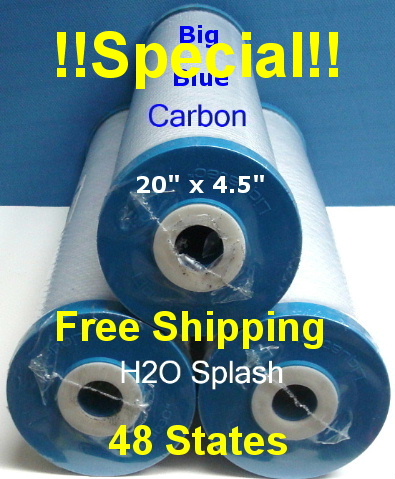 Background
Is your chlorinated city water killing you? Water suppliers began chlorinating water early in the twentieth century to reduce the spread of water-borne pathogens such as cholera and typhoid fever. Although the water treatment was successful, many other chronic diseases began, such as heart disease and cancers, causing many individuals to seek a quick way to remove the chlorine from their water supply prior to drinking or bathing.
There are basically two ways to remove chlorine from water. One is a better alternative than the other. But, if you are concerned about removing chlorine from water, you should know that any time a chemical is used for disinfection, hazardous byproducts are released. So, in addition to learning how to remove chlorine from water, you also need to learn how to remove those hazardous byproducts.
Showering in chlorinated water aggravates skin conditions such as eczema. It also causes itching and excessive dryness in people with otherwise normal skin. It dries out the hair. It can cause rashes and many people are simply allergic to the chemical.
So, it is important to remove chlorine from water, but there are other important steps to take. The byproducts of chlorination increase our lifetime risk for cancer of the bladder and the colon.
The Facts About Chlorine and It’s By-Products
The more we are exposed to the byproducts, the greater our risk becomes. When you were a child, your parents may have been concerned about removing chlorine from water. But, the health risks of exposure to the by products was unknown.
It was not until the Freedom of Information Act that Americans began to learn more about what exactly is in the public supplies around the country. Although some scientists and physicians tried to publish papers with a concern about the risks of chlorination, respected journals would not publish the results.
Some researchers published their own books, in order to get the word out. But, the books were largely ignored. It has only been within the last five years that we knew, for a certainty that disinfection by-products cause cancer.
How To Get Rid Of Chlorine
We know how to remove chlorine from water. All it takes is carbon. The two methods that I mentioned earlier in this article are granulated active carbon or GAC and carbon blocks.
GAC cannot remove THMs, which are the primary chlorination by products. Carbon Blocks can be constructed to remove THMs. They can also remove volatile organic compounds, which are present in many water supplies, but facilities don’t test for them, since there is no requirement to do so.
If properly constructed, a carbon block can remove chlorine from water, along with THMs and microscopic cysts. The EPA has warned that cysts may be present in any public or private supply at any time. Without constant testing, there is no way to determine whether or not you are at risk.
If consumed, cysts cause illnesses similar to food poisoning, but the infection can be lethal. A carbon block with a low micron porous structure can remove cysts, while removing chlorine from water and reducing your risk of cancer. When you select a water filter (counter top, under counter, whole house or reverse osmosis) be certain that you select a system that includes carbon block filters to remove the chlorine and the by-products that result from the use of chlorine.
What Does A Permeate Pump Do To Improve My RO System?
Posted by: | Comments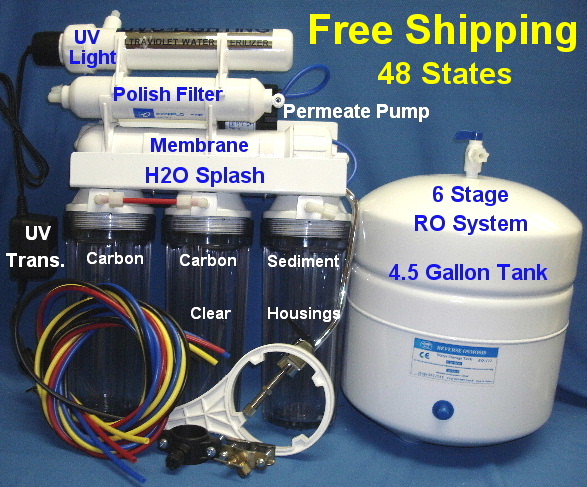 Overview
A Permeate Pump is actually an energy recovery device. It allows you to waste up to eighty percent less water, Not only will you waste much less water, you will make water faster and of higher quality. You will be able to use a new style refigerator ice and water door . In fact you may actually need this pump to make your fridge work. Lots of new refrigerators will not make ice when used with the typical RO system. Not enough pressure.
How Does It Work
A Permeate Pump is a simple, yet revolutionary device. Powered only by the hydraulic energy of the brine water lost to the drain (i.e. no electricity required), the permeate pump forces product water into the storage tank, reducing membrane back pressure and maximizing available feed pressure. These pumps dramatically improve the efficiency of the RO systems water production, while reducing waste water by up to 80%. In other words if your current system requires 3 or more gallons of tap water to produce a gallon of pure water, adding a Permeate Pump will reduce this ratio. Permeate Pumps can also bring storage tanks up to line pressure and then shut the system down when these tanks reach capacity, eliminating the need for a hydraulic shut-off valve. Other benefits include higher delivery pressures, faster R.O. water production, superior water quality, and extended filter/membrane life.
How It Works
A Reverse Osmosis drinking water system requires strong water pressure to force water through the RO membrane and at the same time to flush the contaminants (bad elements) to the drain. The lower the water pressure, the less “good” water (permeate) you get and the more “waste” water you send to the drain. The average membrane rating is based on a constant feed water pressure of (50) psi using 77 degree water. The average “real life” application provides much less favorable conditions than this. The end result is that your RO system is drastically under-performing because of lower pressure and water temperature. To make matters worse, the pressure storage tank that stores your RO. water compounds this problem. When full the RO Storage Tank has an internal pressure of about 60% of your tap water . This pressure is fighting the inlet water pressure (water coming into your RO system from your tap water source). The inlet water pressure is trying to force water through the RO Membrane and into the tank. Even if you have good incoming water pressure of 60 psi, as the tank gets close to full, the actual pressure on the membrane is only 20 or 25 psi because of the off-setting pressure from the storage tank. This will result in reduced permeate (good water) production and vastly increase the flow of water to the drain.
The Results
A permeate pump will improve water quality through better membrane efficiency. In the typical RO system, increased tank pressure causes decreased pressure across the membrane. This decreased pressure causes a substantial decline in system performance and efficiency. A Permeate Pump enhanced RO system maintains full pressure across the RO membrane, even as tank pressure reaches its maximum levels. This reduced back pressure from the storage tank ensures better water quality (maximum TDS reduction), longer filter life and extended membrane life. In the standard RO system, increased tank pressure results in decreased recovery rates. A Permeate Pump enhanced RO system, by automatically minimizing back pressure will accelerate recovery rates (and reduce tank refill times) by up to 65%. Reduces waste water — In typical RO systems, several gallons of wasted tap water (discharged to drain) are required to create a single gallon of purified RO water. A Permeate Pump enhanced R.O. system, will reduce waste water by up to 80%.
1) How Does The Permeate Pump Reduce Waste Water By 80%?
2) Reduce Your Reverse Osmosis Waste Water
What Is Ion Exchange?
Posted by: | Comments
Background
Soluble chemical compounds, when dissolved in water, become ionized; that is, their molecules dissociate into positively and negatively charged components called ions. Consider common table salt, sodium chloride. In its solid form, this compound consists of one sodium atom (Na) and one chlorine atom (Cl) tightly coupled together (NaCl). When dissolved in water, however, the compound splits into two ions, Na+ and Cl-.
Absolutely pure water is a very good insulator; that is, it resists the flow of electricity through it. With ions present, however, electricity will flow through water. Positive ions tend to migrate towards the cathode, or negatively charged electrode and are called cations. Negative ions flow towards the anode, or positive electrode, and are called anions. Because of this effect, measurement of the resistance of water is a very good indication of how pure it is: the higher the resistance, the purer the water.
Ion Exchange
Contaminant ions can be removed from water in a process called ion exchange. As the name implies, contaminant ions are not merely removed from the water; instead, they are exchanged for another kind of ion. This process occurs in ion exchange resin. These resins are usually long chain hydrocarbons such as polystyrene. Attached to these long chain molecules are sites that, because of their chemical makeup, tend to attract and hold ions.
Resin is formed into small porous beads to increase the number of sites that are exposed to water and can participate in ion exchange. Initially, resin is loaded with a harmless ion, usually hydrogen (H+) for cations and hydroxide (OH-) for anions. As waste water passes through the resin, the contaminant ions in the water displace the harmless ions from the sites on the resin. This is because the resin has a greater affinity for the contaminant ion. Affinity for most resins is based loosely on ionic size and charge.
Although ion exchange sounds complex, practical implementation is very simple. Water, contaminated with some dissolved ionic species (dissolved metals, cyanide or some other pollutant), is passed through a column filled with ion exchange resin. Water is discharged from the bottom of the column with little or undetectable concentrations of contaminants.
Sites closest to the entrance fill up first. This means that resin at the top of the column will become loaded first. If the column were made of glass you could actually watch as the column loaded from the top down. Copper contaminants change sand-colored resin to blue, for example. When most of the sites in a resin column are occupied by a single type of ion, then the resin is said to be loaded. As the sites begin to fill up, chances decrease that a contaminant ion will encounter a site occupied by an ion it can displace. This means that the closer to loaded a column is, the more likely it is that contaminants will pass through the column (this is called leakage).
The contaminated solution must remain in contact a certain amount of time in order for all contaminant ions to find a site to exchange with a harmless ion. If the flow rate through the column is too high, reducing contact time with the resin, all contaminants may not be removed.
The ion exchange process percolates water through bead-like spherical resin materials (ion-exchange resins). Ions in the water are exchanged for other ions fixed to the beads. The two most common ion-exchange methods are softening and deionization.
Softening
Softening is used primarily as a treatment method to reduce water hardness for household use as well as for use prior to reverse osmosis (RO) processing. The softeners contain beads that exchange two sodium ions for every calcium or magnesium ion removed from the “softened” water.
Deionization
Deionization (DI) beads exchange either hydrogen ions for cations or hydroxyl ions for anions. The cation exchange resins, made of styrene and divinylbenzene containing sulfonic acid groups, will exchange a hydrogen ion for any cations they encounter (e.g., Na+, Ca++, Al+++). Similarly, the anion exchange resins, made of styrene and containing quaternary ammonium groups, will exchange a hydroxyl ion for any anions (e.g., Cl-). The hydrogen ion from the cation exchanger unites with the hydroxyl ion of the anion exchanger to form pure water.
These resins may be packaged in separate bed exchangers with separate units for the cation and anion exchange beds. Or, they may be packed in mixed bed exchangers containing a mixture of both types of resins. Deionization can be an important component of a total water purification system when used in combination with other methods such as RO, filtration and carbon adsorption.
Removal of Chemicals PCB THM TCE from Drinking Water
Posted by: | Comments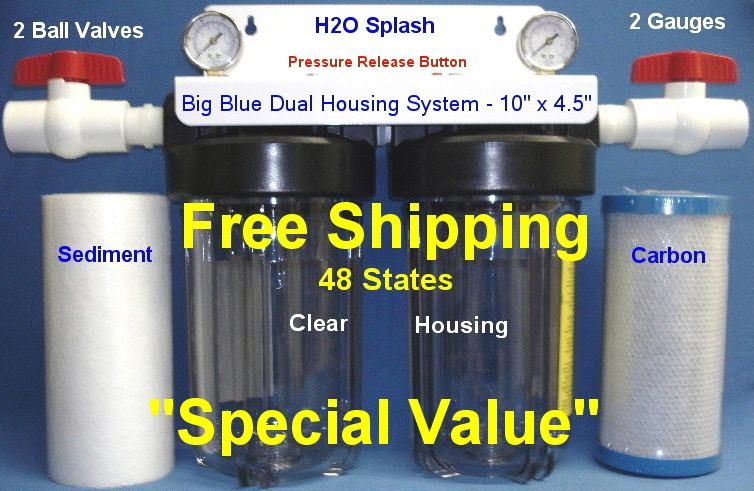 Background
It is always a wise decision to be vigilant concerning the odor and taste of your drinking water, whether from surface or groundwater, municipal or well. Should your water ever have an odor or taste problem, it should come as no shock given the volume of possible causes of it. There are at least 700 pollutants found in the drinking water, but the EPA is required to set standards for only about sixty of them, and these standards are routinely violated without consequence. Out of the 250,000 violations, the states took just over 2,600 enforcement actions, while the EPA took about 600. Municipalities struggle with outdated technology. Over 70,000 different chemical compounds are now in use by industry, agriculture, and private citizens, with 5,000 new and unproven chemical compounds being added into the environment each year. That amounts to 18 billion pounds of new pollutants every year.
There are a vast number of chemical contaminates which can affect a water supply. Included in this category are trihalomethanes THM, pesticides, industrial solvents, halogenated hydrocarbons, polychlorinated biphenyls PCBs, trichloroethylene TCE, and polycyclic aromatic hydrocarbons PAHs. THMs are a byproduct of the chlorination process that most public drinking water systems use for disinfection. Chloroform is the primary THM of concern.
Removal Treatment
The best technology available for removing these chemicals is activated carbon or AC. For the vast majority of the water contaminants listed by the EPA, filter carbon, often called charcoal, is the preferred treatment.
Carbon adsorption is probably the most widely sold method for home water treatment. This is because of its ability to improve water by removing many disagreeable tastes and odors including objectionable chlorine. Activated carbon (AC) is processed carbon. In this form it will remove far more contamination from water than will non-activated carbon. AC is made from a variety of carbon based materials such as coal, petroleum, nut shells, and fruit pits. These are heated to high temperatures with steam in the absence of oxygen (the activation process) leaving millions of microscopic pores and great surface area. One pound of activated carbon provides from 60 to 150 acres of surface area. The pores trap microscopic particles and large organic molecules while the activated surface areas cling on to or adsorb the smaller organic molecules. While AC theoretically has the ability to remove or reduce numerous organic chemicals like pesticides, THM’s, TCE, PCB, etc., its actual effectiveness is highly DEPENDENT on the following factors:
1. The type of carbon and the amount used (carbon block filters will remove chlorine and it’s by-products — GAC will only remove chlorine)
2. The design of the filter and how SLOWLY water flows through it (Contact Time).
3. How long the carbon has been in service and how many gallons it has treated.
4. The kinds of impurities it has removed.
5. The water conditions (e.g. turbidity, temperature, etc.)
Drinking water units, counter top filters, under sink filters, whole house filters and reverse osmosis units (which normally have at least two high quality carbon filters) for the most part rely upon carbon block filters for their effectiveness at chemical removal. For the whole house systems, activated carbon blocks are the most effective chemical removal filters. The choice of a single, dual or triple housing system depends upon the level of contaminants in your water, number of people in the house and the daily water usage.