Author Archive
Solving Drinking Water Problems
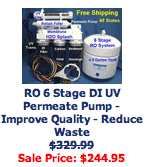
Posted by: | Comments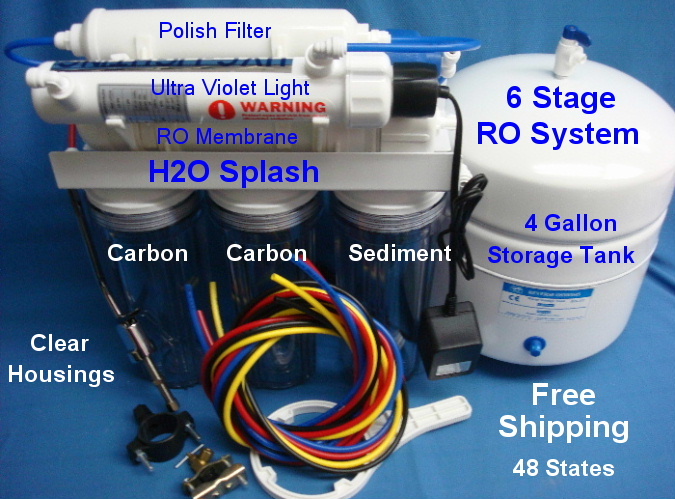 Overview
Water is absolutely vital to our bodies. Just like the surface of the Earth, our bodies are mostly made up of water. The average adult contains 40 to 50 quarts of water! The water in your body must be renewed every 10- 15 days. With the intake of foods such as fruits and vegetables, you are receiving water, but you still must drink at least 6 glasses of water daily to enable your body to function properly – water is the base for all bodily functions.
Water is essential to sustain life, and a satisfactory supply must be made available to consumers. Every effort should be made to achieve a drinking-water quality as high as practicable.
Only 2% of water supplied to our homes is used for human consumption. Centralized hi-tech drinking water treatment plants are a very large expenditure for only 2% of the total water used. In addition,a sizable percentage of our population has private well supplies for water. This segment of the population would not be benefited by large municipal treatment centers. It isn’t logical to build costly plants to treat the water we use for our lawns, to flush our toilets, and to fight fires. It’s evident that it isn’t practical to upgrade our treatment plants to treat all the water they process. Even if the plants were upgraded, the water has to be piped to our homes. This municipal water has the opportunity to pick up materials from the pipes before coming out of the tap and many of the underground pipes date back 30, 40 and even more than 50 years and have various contaminants stored in the pipes which can be carried to your tap.
Boiling Water Alternative
Boiling reduces the threat of living organisms. It serves as a method for killing bacteria during emergencies, it is not recommended for long term use. Very few of the contaminants are removed by boiling. You may kill germs, but you still have dirt, sediment, dissolved solids, bad taste, and odor remaining — there may also be many chemical contaminants such as trihalomethanes, pesticides, industrial solvents, polychlorinated biphenylsand trichloroethykenes.
Bottled Water Alternative
Is the solution for safe drinking water provided by paying $.80 to $2.00 per gallon to drink water prepared and bottled by someone else? This high cost reflects the price of bottling, storage, trucking, fuel expenses, wages, insurances, etc. If you have a point of use water system, you eliminate all of these middleman costs, and enjoy purified water for pennies per gallon right in your own home.
Reverse Osmosis Alternative
Osmosis occurs in living organisms in which there is a piece of tissue or a membrane with fluids on either side of it. Fluids having a lesser concentration will be drawn through the tissue/membrane to mix with fluids having a greater concentration. This is to equalize the concentration of substances in the fluids on both sides of the tissue/membrane.
In the natural world surrounding us, and inside of us, there is a vast network of biological membranes. These screening barriers govern the selection and passage of chemicals and fluids. In essence, these membranes control the traffic of the life processes themselves.
One integral function is that of the kidneys. As the blood enters the kidney, it flows in small arteries in close contact with tiny excretory units of the kidney known as nephrons. From the blood, water is extracted along with wastes to become an essential component of urine. Water can remain in the nephron to become reabsorbed back into the blood stream if not enough water is consumed to be excreted freely. Without our kidneys, we would not be able to survive. The first artificial kidney was built from a cellophane membrane in 1944. In the early 1950’s, Drs. Sidney Loeb and S. Sourirajan from UCLA Medical School developed the first synthetic membrane made from cellulose acetates. This had commercial Reverse Osmosis capabilities.
Reverse Osmosis is exactly the opposite of Osmosis. In Reverse Osmosis (RO), water having a lesser concentration of substances is derived from water having a higher concentration of substances. Tapwater with dissolved solids and other materials in it is forced by the water pressure inherent in our water pipes against a membrane. The water is removed from this concentration of materials by penetrating the RO membrane, and leaving the materials behind — this can be up to a 99% removal of dissolved solids.
The RO membrane is an ultimate mechanical filter, or ultra filter. It strains out virtually all particulate material, turbidity, bacteria, microorganisms (on potable water only), asbestos, even single molecules of the heavier organics. To appreciate the fineness of this membrane or ultrafilter, its pore size would be two one hundred millionths of an inch in diameter. That’s smaller than what can be seen by an optical microscope! By the remarkable phenomenon of RO, particles smaller than water molecules themselves are removed! The molecules diffuse through the membrane in a purified state, and collect on the opposite side. Reverse Osmosis membranes remove and reject such a wide spectrum of impurities from water using VERY MINIMAL ENERGY — just water pressure. RO gives the best water available for the lowest price expended.
Ultraviolet Disinfection Alternative
Ultraviolet light, at the germicidal wavelength of 253.7 nanometers, alters the genetic (DNA) material in cells so that bacteria, viruses, molds, algae and other microorganisms can no longer reproduce. The microorganisms are considered dead, and the risk of disease from them is eliminated.
As the water flows past the UV lamps in UV disinfection systems, the microorganisms are exposed to a lethal dose of UV energy. UV dose is measured as the product of UV light intensity times the exposure time within the UV lamp array. Microbiologists have determined the effective dose of UV energy (expressed in microwatt- seconds/cm2) needed to destroy pathogens as well as indicator organisms found in wastewater.
Used properly, ultraviolet light effectively destroys bacteria, viruses and other microorganisms in water and wastewater, without using chemicals. By doing away with chemical treatment, many other problems are also eliminated. There is no longer any need to worry about operator safety or the requirement for buildings for storage and handling of dangerous solutions and gases. Costly liability insurance premiums are significantly reduced. Testing of effluent for chlorine residual is no longer necessary, and toxicity problems associated with chlorine use are eliminated.
Reverse Osmosis and Ultraviolet Disinfection Alternative
The combination of Reverse Osmosis and Ultraviolet light disinfection will eliminate chemicals, sediment, TDS (Total Dissolved Solids), bacteria, viruses, microorganisms and the many other contaminants that have found their way into the municipal and well water supplies. Governmental agencies as well as University research has verified that residential Reverse Osmosis treatment of drinking water is the most efficient and cost effective method of providing purified drinking water for household use.
Removal of Hexavalent Chromium From Your Drinking Water
Posted by: | Comments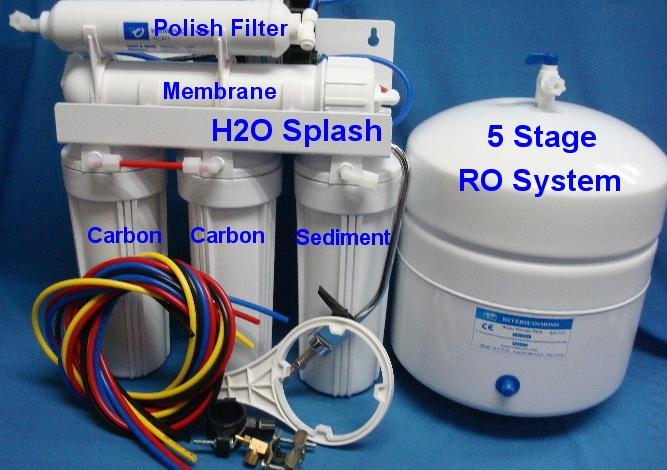
Background
If you’ve heard anything about hexavalent chromium in tap water, it was probably from the movie Erin Brockovich. In that film, the legal clerk and environmental activist Erin Brockovich (as played by Julia Roberts) built a case against California’s Pacific Gas and Electric litigation alleging that the cancer-causing hexavalent chromium the company was using to fight corrosion in cooling towers had seeped into the ground water of Hinkley, California.
Since settling that case in 1996, Brockovich has continued to work on cases involving hexavalent chromium. Just last year, she began investigating a case in Midland, Texas and assisted in filing a lawsuit against Prime Tanning Corp. of St. Joseph, Missouri. And if recent tests are any indication, Erin Brockovich and others like her might soon be swamped with similar cases.
Recent laboratory tests commisioned by the Environmental Working Group have found hexavalent chromium in the tap water of 31 cities. More disturbing still is the fact that the tap water from only 35 cities was sampled for the cancer-causing chemical, meaning it was found in 89 percent of the cities tested. The EWG estimates that 74 million Americans in 42 states could be drinking tap water that is polluted with chromium or its carcinogenic form, hexavalent chromium.
Finding Hexavalent Chromium In Your Water
The only way to learn if your water source has hexavalent chromium is to check with your public water supplier and request a water quality report, said NJIT Professor Taha Marhaba, a civil/environmental engineer. Most municipal or city engineers should be able to provide such a report upon request. Additional information specifically about hexavalent chromium levels may also be available.
Removal Of Hexavalent Chromium
“In general, hexavalent chromium can be found in either surface or groundwater sources and its source can be either natural or man-made industrial operations that have used chromium,” Marhaba said. “The best way to remove this and other known and un-known contaminants from the water supply to a residence is to install a five-stage reverse osmosis home unit.”
Marhaba, http://www.njit.edu/news/experts/marhaba.php , is a professor and chair of the department of civil and environmental engineering and director of the New Jersey Applied Water Research Center at NJIT. His expertise in water quality most notably has developed what is known as the spectral fluorescent signatures (SFS) technique, which is used to rapidly identify organics in waterorganics that could be problematic. The SFS acts like a fingerprint of water, characterizing its organic content and allowing researchers to see if the water contains natural or unnatural sources. Most importantly, the SFS allows researchers to determine the organic character of watersheds and to check the water quality.
Chromium is an inorganic metallic element that is odorless and tasteless. It is found naturally in rocks, plants, soil and volcanic dust, humans and animals. The most common forms of chromium in the environment are trivalent (chromium +3), which has relative low toxicity and occurs naturally in many vegetables, fruits, meats, grains and yeast, and hexavalent (chromium +6). Trivalent chromium can be oxidized and dissolved through natural processes, leading to hazardous levels of aqueous hexavalent chromium in surface and groundwater.
The latter, which is more toxic and poses potential health risks to people, has been shown to cause allergic dermatitis in people who over many years use water containing water with a total chromium level in excess of the recommended maximum contaminant level (MCL). It can be found in the compounds salt sodium dichromate, chromium trioxide and various salts of chromate and dichromate. Hexavalent chromium is used for the production of stainless steel, wood preservation, textile dyes, leather tanning, and as anti-corrosion coatings.
Marhaba noted that the Environmental Protection Agency (EPA) set a Maximum Contaminant Level Goal (MCLG) for total chromium at 0.1 mg/L or 100 parts per billion (ppb). This level was set at a level below which there were no adverse health effects on humans. The EPA has set an enforceable regulation for chromium (total), called a maximum contaminant level (MCL), at 0.1 mg/L or 100 ppb. MCLs are set as close to the health goals as possible, considering cost, benefits and the ability of public water systems to detect and remove contaminants using suitable treatment technologies. In the case of chromium (total), the MCL equals the MCLG, because analytical methods or treatment technology do not pose any limitation. It should be noted that EPA still does not have an enforceable MCL for the more toxic form of chromium (i.e. hexavalent).
The EPA has set the following “best available technologies” for the removal of chromium (total) to below 0.1 mg/L or 100 ppb: a) coagulation/filtration, (b) ion exchange, (c) lime softening, and (d) reverse osmosis membrane processes. All these technologies are generally applied in large scale or at “point of treatment”. However, there are “point of use” home units that have ion exchange and reverse osmosis processes that can remove chromium below the MCL.
Environmental Working Group Research
The new findings could pose another challenge for utilities that are detecting dozens of unregulated substances in treated drinking water, including pharmaceutical drugs and industrial chemicals that can pass unfiltered through conventional treatment methods. Chromium can be found naturally in the environment but also is released by industry into waterways.
While the potential health threats of many pollutants are still being studied, researchers say there is a clear risk of stomach cancer from drinking water contaminated with hexavalent chromium, also known as chromium-6.
“For years scientists assumed this wasn’t a problem because acids in our stomachs can convert chromium-6 into chromium-3, an essential nutrient,” said Rebecca Sutton, a senior scientist with the Environmental Working Group, a Washington-based research and advocacy organization. “Newer science is showing our stomachs can’t take care of everything, which means the dangerous form of chromium is getting into our bodies and can cause damage.”
Perhaps you’re a little hesitant to trust the water that comes out of your tap, especially in light of the recent discovery of hexavalent chromium (a.k.a. chromium-vi, or chromium-6) in water, in 31 cities across the U.S. If you think bottled water will save you, think again. Your best bet is to buy a reverse osmosis filter. Even the Environmental Working Group admitted that bottled water will not guarantee protection from this carcinogenic substance.
Reduce Your Reverse Osmosis Waste Water
Posted by: | Comments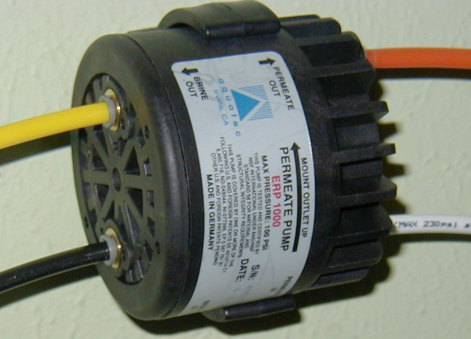
Waste water can be a really, really big deal with Reverse Osmosis systems. The ratio of 3 or 4 gallons of water (or more) to make 1 gallon of purified water turns off many folks from purchasing Reverse Osmosis systems and it is concerning to those who own a Reverse Osmosis unit. The amount of waste water depends on several factors including incoming water pressure, incoming water temperature, membrane efficiency and the contamination level (TDS – Total Dissolved Solids) in your incoming water.Waste water is obviously a concern for many folks on municipal water because of cost and it is also a concern for those with a septic tank system because too much waste water will cause the tank to fill quickly.
Reduce Waste – No Electricity
A Permeate Pump will drastically reduce Reverse Osmosis system waste water by up to 80%. This inline pump relies only on hydraulic energy in the drain water (brine) that usually goes down the drain, there is no electricity required. A Permeate Pump forces pure water into the storage tank and this action reduces the membrane back pressure and increases the feed pressure going into the RO membrane. This results in increased membrane efficiency and it increases the life of the RO membrane plus it reduces waste water by up to 8o%.
Other Articles On Reducing Waste Water By Up To 80%
1) What Does A Permeate Pump Do To Improve My RO System?
2) How Does A Permeate Pump Reduce RO My Waste Water By 80%?
Ultraviolet Light Disinfection For Drinking Water
Posted by: | CommentsUsing Ultraviolet (UV) Light for drinking water disinfection dates back to 1916 in the USA. The National Drinking Water Clearinghouse states that Ultraviolet light offers no residual disinfection in the water passing through the unit and the water is available for immediate usage.
What is UV Disinfection?
UV light, which continues to be a reliable means of disinfection, involves exposing contaminated water to radiation from UV light. The treatment works because UV light penetrates an organism’s cell walls and disrupts the cell’s genetic material making reproduction impossible. A special lamp generates the radiation that creates UV light by striking an electric arc through low-pressure mercury vapor. This lamp emits a broad spectrum of radiation with intense peaks of UV wavelengths of 253.7 nanometers.
Advantages
Generally, an Ultraviolet light is simple to install and requires little maintenance or space. Improved safety, minimum service time, low operation and maintenance costs and the absence of a chemical smell or taste in the finished water are primary factors for selecting UV technology rather than traditional disinfection technologies.
UV breaks down or removes organic contaminants. UV light disinfection does not form any disinfection by-products nor does it cause any increase in assimilable organic carbon (AOC). Government research has confirmed that UV effectiveness is insensitive to temperature and ph differences. In addition, researchers found that UV application does not convert nitrates to nitrites, or bromide to bromines or bromates.
The advantages of using UV rather than chemical disinfection include;
^ Has no known toxic or nontoxic by-products
* Has no danger of overdose
* Removes organic contaminants
* Has no volatile organic compound (VOC) emissions or toxic air emissions
* Has no on-site smell and no smell in the final water product
* Requires very little contact time (seconds verse minutes for chemical disinfection)
* Does not require storage of hazardous material
* Requires minimal space for equipment and contact chamber
* Improves the taste of water because of some organic contaminant and nuisance microorganisms are destroyed
* Does not affect minerals in the water
* Has little or no impact on the environment
Diagram of an Ultraviolet System
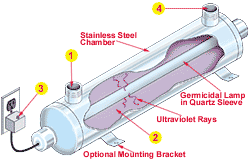 |
1. | Incoming water enters the UV unit and flows into the space between the quartz sleeve and the outside chamber wall. |
| 2. | Within the chamber, water is exposed to intense germicidal ultraviolet radiation. | |
| 3. | Transformer with LED indicator light provides visual indication of germicidal lamp operation. | |
| 4. | Water leaving the UV unit is disinfection free and instantly ready for use. |