Reducing Reverse Osmosis Waste Water – Zero Waste System vs. Permeate Pump
ByOpening Comments
Waste water is a necessary by-product of a Reverse Osmosis water purification system. The highest quality Reverse Osmosis systems will make 3 to 4 gallons of waste water brine for every one gallon of purified water. Lesser quality Reverse Osmosis systems can send 8 gallons or more of waste water to the drain. Recently some companies (including our company) have introduced “zero waste” Reverse Osmosis systems. These systems still produce brine (waste) water as a by-product of the reverse osmosis process but are listed as “zero waste” because the brine is recycled, not sent to the drain. We will discuss the “Pros and Cons” of zero waste systems vs. Reverse Osmosis systems with a permeate pump installed to dramatically reduce waste water.
The “Zero Waste” Reverse Osmosis system process
Zero Waste RO systems come in three types. Type “1” are systems that eliminate waste water by pumping the brine waste water into the hot water plumbing instead of down the drain. The drawback to this design is that the waste water injected into the hot water line will be discharged from the hot water outlets throughout your home. The 2nd type of process used by “zero waste” systems is to inject the waste water brine back into the cold water line feeding the Reverse Osmosis system.The downside to this design of “zero waste” is the additional concentrated brine waste water in the feed water to the Reverse Osmosis system. This added waste will force the Reverse Osmosis system to work harder and thereby wear down the RO components more quickly resulting in more frequent filter changes and a much shorter membrane useful life from 2 or 3 or more years to as short as 1 year. The 3rd idea is to add a system to capture the waste water in a reservoir and use it for flushing the toilet.The obvious big drawback to this approach for “zero waste” is the added cost for a reservoir, a pump and the plumbing required to supply the water to the toilet.
The Permeate Pump Alternative
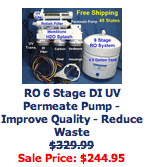
While a Permeate Pump equipped Reverse Osmosis system will send some water to the drain, it can reduce the amount of waste water by up to 80%. The Permeate Pump Reverse Osmosis equipped system disposes the small amount of brine water rather than injecting it into the hot water or the feed water where the concentrated waste water will end up in the family food or cause the RO system to have an early failure. The Permeate pump brings additional benefits beyond reduced waste water such as faster water production, prolonged system life and cleaner purified water.
“Zero Waste” Pros and Cons
Pro – No waste water
Con- Although not a major item, the concentrated brine water will be dispensed from hot water uses throughout the home.
Con – When the drain water is injected back into the incoming cold water line, there will be reduced RO system life and more frequent filter changes
Con – When the drain water is placed in a storage tank for other uses around the house, there will be additional equipment costs
Permeate Pump Pros and Cons
Pro – Increased purified water production
Pro – Increased storage tank holding capacity
Pro – Increased storage tank dispensing pressure
Pro – Cleaner RO purified water
Con- Small amount of waste water to the drain
How Much Water Does It Waste? Or Is Waste The Correct Word?
It depends on what you mean by waste. A home Reverse Osmosis unit uses water to clean itself and wash away impurities. It’s like a lot of other water-using appliances. We use water to wash clothes, to wash dishes, to wash cars, to flush toilets and we don’t refer to the water that gets sent to the drain as waste water. A reverse osmosis unit uses more water in its operation than you actually consume, but it doesn’t use enough that you’ll notice it on your water bill. It uses water only while it’s filling its storage tank. When the tank is full, the whole unit shuts down and no water runs to drain. In terms of expense, it’s like a couple or three extra toilet flushes a day.