What Does A Permeate Pump Do To Improve My RO System?
By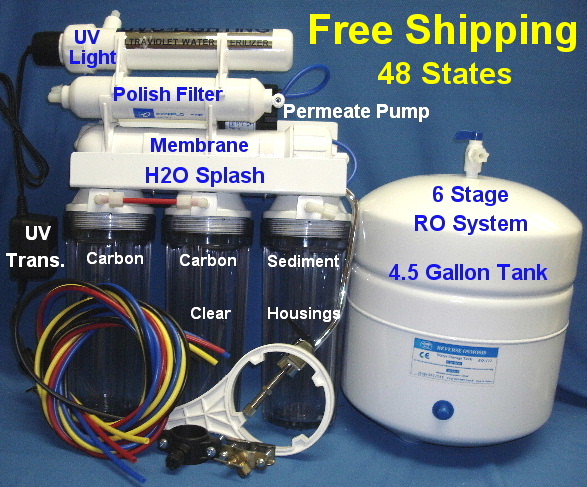 Overview
A Permeate Pump is actually an energy recovery device. It allows you to waste up to eighty percent less water, Not only will you waste much less water, you will make water faster and of higher quality. You will be able to use a new style refigerator ice and water door . In fact you may actually need this pump to make your fridge work. Lots of new refrigerators will not make ice when used with the typical RO system. Not enough pressure.
How Does It Work
A Permeate Pump is a simple, yet revolutionary device. Powered only by the hydraulic energy of the brine water lost to the drain (i.e. no electricity required), the permeate pump forces product water into the storage tank, reducing membrane back pressure and maximizing available feed pressure. These pumps dramatically improve the efficiency of the RO systems water production, while reducing waste water by up to 80%. In other words if your current system requires 3 or more gallons of tap water to produce a gallon of pure water, adding a Permeate Pump will reduce this ratio. Permeate Pumps can also bring storage tanks up to line pressure and then shut the system down when these tanks reach capacity, eliminating the need for a hydraulic shut-off valve. Other benefits include higher delivery pressures, faster R.O. water production, superior water quality, and extended filter/membrane life.
How It Works
A Reverse Osmosis drinking water system requires strong water pressure to force water through the RO membrane and at the same time to flush the contaminants (bad elements) to the drain. The lower the water pressure, the less “good” water (permeate) you get and the more “waste” water you send to the drain. The average membrane rating is based on a constant feed water pressure of (50) psi using 77 degree water. The average “real life” application provides much less favorable conditions than this. The end result is that your RO system is drastically under-performing because of lower pressure and water temperature. To make matters worse, the pressure storage tank that stores your RO. water compounds this problem. When full the RO Storage Tank has an internal pressure of about 60% of your tap water . This pressure is fighting the inlet water pressure (water coming into your RO system from your tap water source). The inlet water pressure is trying to force water through the RO Membrane and into the tank. Even if you have good incoming water pressure of 60 psi, as the tank gets close to full, the actual pressure on the membrane is only 20 or 25 psi because of the off-setting pressure from the storage tank. This will result in reduced permeate (good water) production and vastly increase the flow of water to the drain.
The Results
A permeate pump will improve water quality through better membrane efficiency. In the typical RO system, increased tank pressure causes decreased pressure across the membrane. This decreased pressure causes a substantial decline in system performance and efficiency. A Permeate Pump enhanced RO system maintains full pressure across the RO membrane, even as tank pressure reaches its maximum levels. This reduced back pressure from the storage tank ensures better water quality (maximum TDS reduction), longer filter life and extended membrane life. In the standard RO system, increased tank pressure results in decreased recovery rates. A Permeate Pump enhanced RO system, by automatically minimizing back pressure will accelerate recovery rates (and reduce tank refill times) by up to 65%. Reduces waste water — In typical RO systems, several gallons of wasted tap water (discharged to drain) are required to create a single gallon of purified RO water. A Permeate Pump enhanced R.O. system, will reduce waste water by up to 80%.
1) How Does The Permeate Pump Reduce Waste Water By 80%?
2) Reduce Your Reverse Osmosis Waste Water