Solving Drinking Water Problems
By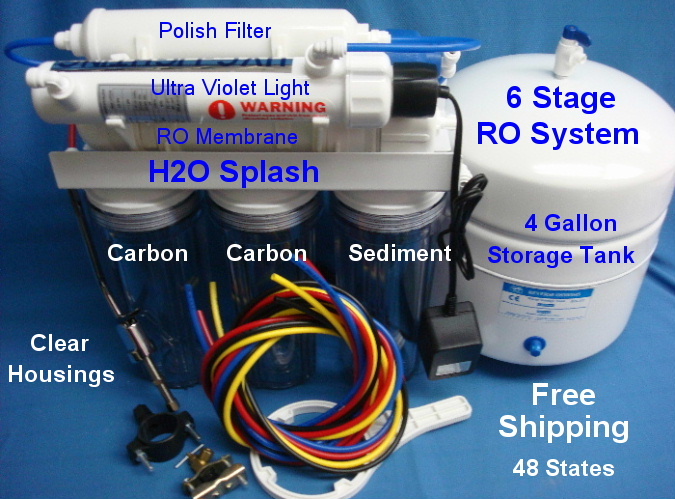 Overview
Water is absolutely vital to our bodies. Just like the surface of the Earth, our bodies are mostly made up of water. The average adult contains 40 to 50 quarts of water! The water in your body must be renewed every 10- 15 days. With the intake of foods such as fruits and vegetables, you are receiving water, but you still must drink at least 6 glasses of water daily to enable your body to function properly – water is the base for all bodily functions.
Water is essential to sustain life, and a satisfactory supply must be made available to consumers. Every effort should be made to achieve a drinking-water quality as high as practicable.
Only 2% of water supplied to our homes is used for human consumption. Centralized hi-tech drinking water treatment plants are a very large expenditure for only 2% of the total water used. In addition,a sizable percentage of our population has private well supplies for water. This segment of the population would not be benefited by large municipal treatment centers. It isn’t logical to build costly plants to treat the water we use for our lawns, to flush our toilets, and to fight fires. It’s evident that it isn’t practical to upgrade our treatment plants to treat all the water they process. Even if the plants were upgraded, the water has to be piped to our homes. This municipal water has the opportunity to pick up materials from the pipes before coming out of the tap and many of the underground pipes date back 30, 40 and even more than 50 years and have various contaminants stored in the pipes which can be carried to your tap.
Boiling Water Alternative
Boiling reduces the threat of living organisms. It serves as a method for killing bacteria during emergencies, it is not recommended for long term use. Very few of the contaminants are removed by boiling. You may kill germs, but you still have dirt, sediment, dissolved solids, bad taste, and odor remaining — there may also be many chemical contaminants such as trihalomethanes, pesticides, industrial solvents, polychlorinated biphenylsand trichloroethykenes.
Bottled Water Alternative
Is the solution for safe drinking water provided by paying $.80 to $2.00 per gallon to drink water prepared and bottled by someone else? This high cost reflects the price of bottling, storage, trucking, fuel expenses, wages, insurances, etc. If you have a point of use water system, you eliminate all of these middleman costs, and enjoy purified water for pennies per gallon right in your own home.
Reverse Osmosis Alternative
Osmosis occurs in living organisms in which there is a piece of tissue or a membrane with fluids on either side of it. Fluids having a lesser concentration will be drawn through the tissue/membrane to mix with fluids having a greater concentration. This is to equalize the concentration of substances in the fluids on both sides of the tissue/membrane.
In the natural world surrounding us, and inside of us, there is a vast network of biological membranes. These screening barriers govern the selection and passage of chemicals and fluids. In essence, these membranes control the traffic of the life processes themselves.
One integral function is that of the kidneys. As the blood enters the kidney, it flows in small arteries in close contact with tiny excretory units of the kidney known as nephrons. From the blood, water is extracted along with wastes to become an essential component of urine. Water can remain in the nephron to become reabsorbed back into the blood stream if not enough water is consumed to be excreted freely. Without our kidneys, we would not be able to survive. The first artificial kidney was built from a cellophane membrane in 1944. In the early 1950’s, Drs. Sidney Loeb and S. Sourirajan from UCLA Medical School developed the first synthetic membrane made from cellulose acetates. This had commercial Reverse Osmosis capabilities.
Reverse Osmosis is exactly the opposite of Osmosis. In Reverse Osmosis (RO), water having a lesser concentration of substances is derived from water having a higher concentration of substances. Tapwater with dissolved solids and other materials in it is forced by the water pressure inherent in our water pipes against a membrane. The water is removed from this concentration of materials by penetrating the RO membrane, and leaving the materials behind — this can be up to a 99% removal of dissolved solids.
The RO membrane is an ultimate mechanical filter, or ultra filter. It strains out virtually all particulate material, turbidity, bacteria, microorganisms (on potable water only), asbestos, even single molecules of the heavier organics. To appreciate the fineness of this membrane or ultrafilter, its pore size would be two one hundred millionths of an inch in diameter. That’s smaller than what can be seen by an optical microscope! By the remarkable phenomenon of RO, particles smaller than water molecules themselves are removed! The molecules diffuse through the membrane in a purified state, and collect on the opposite side. Reverse Osmosis membranes remove and reject such a wide spectrum of impurities from water using VERY MINIMAL ENERGY — just water pressure. RO gives the best water available for the lowest price expended.
Ultraviolet Disinfection Alternative
Ultraviolet light, at the germicidal wavelength of 253.7 nanometers, alters the genetic (DNA) material in cells so that bacteria, viruses, molds, algae and other microorganisms can no longer reproduce. The microorganisms are considered dead, and the risk of disease from them is eliminated.
As the water flows past the UV lamps in UV disinfection systems, the microorganisms are exposed to a lethal dose of UV energy. UV dose is measured as the product of UV light intensity times the exposure time within the UV lamp array. Microbiologists have determined the effective dose of UV energy (expressed in microwatt- seconds/cm2) needed to destroy pathogens as well as indicator organisms found in wastewater.
Used properly, ultraviolet light effectively destroys bacteria, viruses and other microorganisms in water and wastewater, without using chemicals. By doing away with chemical treatment, many other problems are also eliminated. There is no longer any need to worry about operator safety or the requirement for buildings for storage and handling of dangerous solutions and gases. Costly liability insurance premiums are significantly reduced. Testing of effluent for chlorine residual is no longer necessary, and toxicity problems associated with chlorine use are eliminated.
Reverse Osmosis and Ultraviolet Disinfection Alternative
The combination of Reverse Osmosis and Ultraviolet light disinfection will eliminate chemicals, sediment, TDS (Total Dissolved Solids), bacteria, viruses, microorganisms and the many other contaminants that have found their way into the municipal and well water supplies. Governmental agencies as well as University research has verified that residential Reverse Osmosis treatment of drinking water is the most efficient and cost effective method of providing purified drinking water for household use.