Removal of Hexavalent Chromium From Your Drinking Water
By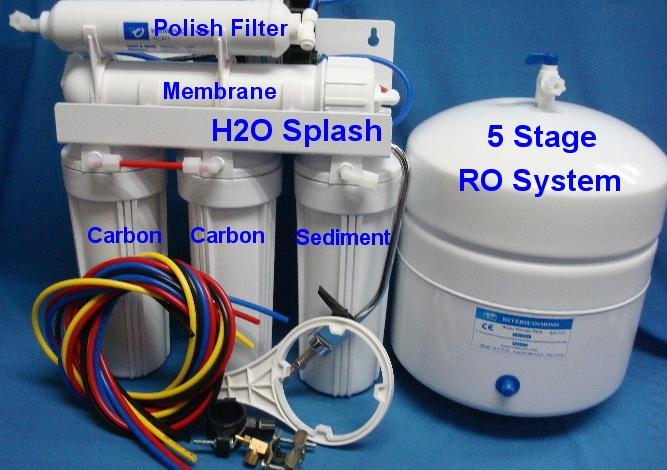
Background
If you’ve heard anything about hexavalent chromium in tap water, it was probably from the movie Erin Brockovich. In that film, the legal clerk and environmental activist Erin Brockovich (as played by Julia Roberts) built a case against California’s Pacific Gas and Electric litigation alleging that the cancer-causing hexavalent chromium the company was using to fight corrosion in cooling towers had seeped into the ground water of Hinkley, California.
Since settling that case in 1996, Brockovich has continued to work on cases involving hexavalent chromium. Just last year, she began investigating a case in Midland, Texas and assisted in filing a lawsuit against Prime Tanning Corp. of St. Joseph, Missouri. And if recent tests are any indication, Erin Brockovich and others like her might soon be swamped with similar cases.
Recent laboratory tests commisioned by the Environmental Working Group have found hexavalent chromium in the tap water of 31 cities. More disturbing still is the fact that the tap water from only 35 cities was sampled for the cancer-causing chemical, meaning it was found in 89 percent of the cities tested. The EWG estimates that 74 million Americans in 42 states could be drinking tap water that is polluted with chromium or its carcinogenic form, hexavalent chromium.
Finding Hexavalent Chromium In Your Water
The only way to learn if your water source has hexavalent chromium is to check with your public water supplier and request a water quality report, said NJIT Professor Taha Marhaba, a civil/environmental engineer. Most municipal or city engineers should be able to provide such a report upon request. Additional information specifically about hexavalent chromium levels may also be available.
Removal Of Hexavalent Chromium
“In general, hexavalent chromium can be found in either surface or groundwater sources and its source can be either natural or man-made industrial operations that have used chromium,” Marhaba said. “The best way to remove this and other known and un-known contaminants from the water supply to a residence is to install a five-stage reverse osmosis home unit.”
Marhaba, http://www.njit.edu/news/experts/marhaba.php , is a professor and chair of the department of civil and environmental engineering and director of the New Jersey Applied Water Research Center at NJIT. His expertise in water quality most notably has developed what is known as the spectral fluorescent signatures (SFS) technique, which is used to rapidly identify organics in waterorganics that could be problematic. The SFS acts like a fingerprint of water, characterizing its organic content and allowing researchers to see if the water contains natural or unnatural sources. Most importantly, the SFS allows researchers to determine the organic character of watersheds and to check the water quality.
Chromium is an inorganic metallic element that is odorless and tasteless. It is found naturally in rocks, plants, soil and volcanic dust, humans and animals. The most common forms of chromium in the environment are trivalent (chromium +3), which has relative low toxicity and occurs naturally in many vegetables, fruits, meats, grains and yeast, and hexavalent (chromium +6). Trivalent chromium can be oxidized and dissolved through natural processes, leading to hazardous levels of aqueous hexavalent chromium in surface and groundwater.
The latter, which is more toxic and poses potential health risks to people, has been shown to cause allergic dermatitis in people who over many years use water containing water with a total chromium level in excess of the recommended maximum contaminant level (MCL). It can be found in the compounds salt sodium dichromate, chromium trioxide and various salts of chromate and dichromate. Hexavalent chromium is used for the production of stainless steel, wood preservation, textile dyes, leather tanning, and as anti-corrosion coatings.
Marhaba noted that the Environmental Protection Agency (EPA) set a Maximum Contaminant Level Goal (MCLG) for total chromium at 0.1 mg/L or 100 parts per billion (ppb). This level was set at a level below which there were no adverse health effects on humans. The EPA has set an enforceable regulation for chromium (total), called a maximum contaminant level (MCL), at 0.1 mg/L or 100 ppb. MCLs are set as close to the health goals as possible, considering cost, benefits and the ability of public water systems to detect and remove contaminants using suitable treatment technologies. In the case of chromium (total), the MCL equals the MCLG, because analytical methods or treatment technology do not pose any limitation. It should be noted that EPA still does not have an enforceable MCL for the more toxic form of chromium (i.e. hexavalent).
The EPA has set the following “best available technologies” for the removal of chromium (total) to below 0.1 mg/L or 100 ppb: a) coagulation/filtration, (b) ion exchange, (c) lime softening, and (d) reverse osmosis membrane processes. All these technologies are generally applied in large scale or at “point of treatment”. However, there are “point of use” home units that have ion exchange and reverse osmosis processes that can remove chromium below the MCL.
Environmental Working Group Research
The new findings could pose another challenge for utilities that are detecting dozens of unregulated substances in treated drinking water, including pharmaceutical drugs and industrial chemicals that can pass unfiltered through conventional treatment methods. Chromium can be found naturally in the environment but also is released by industry into waterways.
While the potential health threats of many pollutants are still being studied, researchers say there is a clear risk of stomach cancer from drinking water contaminated with hexavalent chromium, also known as chromium-6.
“For years scientists assumed this wasn’t a problem because acids in our stomachs can convert chromium-6 into chromium-3, an essential nutrient,” said Rebecca Sutton, a senior scientist with the Environmental Working Group, a Washington-based research and advocacy organization. “Newer science is showing our stomachs can’t take care of everything, which means the dangerous form of chromium is getting into our bodies and can cause damage.”
Perhaps you’re a little hesitant to trust the water that comes out of your tap, especially in light of the recent discovery of hexavalent chromium (a.k.a. chromium-vi, or chromium-6) in water, in 31 cities across the U.S. If you think bottled water will save you, think again. Your best bet is to buy a reverse osmosis filter. Even the Environmental Working Group admitted that bottled water will not guarantee protection from this carcinogenic substance.